Summary
A dry-dock is the most expensive and concentrated maintenance event in a ship's five-year cycle. In a few weeks the vessel goes through class renewal work, statutory bottom survey, overhauls that cannot be done afloat, coating renewal and often upgrades, all while off-hire. Every day in the yard costs money, and every item missed in the specification becomes an expensive extra or waits another five years.
Good dry-docks are planned from data, not from memory. This paper describes how to use the Planned Maintenance System (PMS) to build the specification, manage the survey requirements and lead times, and update the PMS afterwards so that the next cycle starts from the truth.
1. The survey cycle that drives the dock
Classification surveys run on a five-year cycle:
- Annual surveys, carried out within a window around each anniversary of the class certificate.
- An intermediate survey, held in place of the second or third annual survey.
- A renewal (special) survey at the end of the five-year period, the most extensive examination of hull and machinery. Renewal work may be started ahead of the due date and progressed in stages, subject to the society's rules.
Statutory requirements add their own constraints. Under SOLAS, a cargo ship's bottom must be inspected twice in any five-year period, one inspection coinciding with the renewal survey, and the interval between any two inspections must not exceed 36 months. Some ships can use an in-water survey in place of one dry-dock inspection, where class and flag accept it.
For bulk carriers and oil tankers, the Enhanced Survey Programme (ESP) under SOLAS chapter XI-1 and the IMO 2011 ESP Code, implemented through the IACS Z10 series of Unified Requirements, adds detailed requirements for close-up surveys, thickness measurements and tank testing that grow with ship age.
Machinery items under continuous survey (see paper 02) fall due across the cycle; those that need the ship out of the water, such as sea valves, propeller and stern tube arrangements, are naturally grouped into the dock. Propeller shaft survey intervals depend on the shaft arrangement and the class condition-monitoring options in force.
The PMS should show all of this in one view: survey dates and windows, class items due before the next dock opportunity, outstanding conditions of class and recommendations, and the statutory bottom-survey timeline.
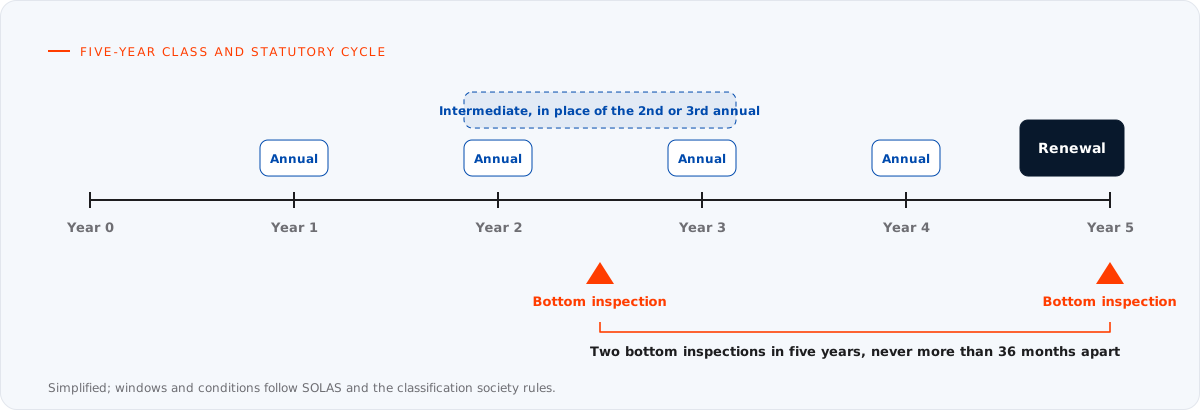
Figure 1. The five-year cycle that drives dry-dock timing (simplified).
2. Building the repair specification from the PMS
A dry-dock specification is a list of work for the yard, described precisely enough to price and plan. Most of it should come straight from data the PMS already holds:
| Source | What it contributes |
|---|---|
| Jobs due in the dock window | Planned overhauls and inspections falling due before the next opportunity, especially those that need the ship out of the water |
| Class survey items | Renewal survey requirements, continuous survey items, outstanding conditions and recommendations |
| Deferred work | Jobs postponed until dry-dock, with their original reasons |
| Defects and findings | Open defects, condition monitoring alarms, inspection findings and crew reports |
| Maker requirements | Service letters, recommended overhauls and campaign work |
| Regulatory changes | New equipment or modifications required by upcoming regulations |
| Owner's projects | Upgrades and energy-saving measures planned for this dock |
For each item the specification should state the equipment and location, the scope of work, what the yard supplies and what the owner supplies, the access and services needed, and the acceptance criteria. Linking every specification line to its PMS job or defect keeps the scope traceable and makes the post-dock update straightforward.
Avoiding the classic gaps
The most common causes of extras and delays are predictable:
- Undefined scope: "overhaul as required" cannot be priced. Use the maker's procedure and the job description from the PMS.
- Unknown condition: hull thickness and steel renewal are uncertain until measured. Take thickness measurements early where the rules and access allow, and price steel by unit rate.
- Missing owner's supply: spares, special tools and service engineers not ordered in time.
- Late additions: findings from voyage inspections not fed into the specification before tender.
3. Long-lead items and procurement
Dry-dock spares and services often have lead times longer than the planning window: propeller and stern tube seals, shaft components, large valves, pump overhaul kits, coating systems and maker service engineers. The PMS spare parts links (paper 06) make it possible to generate the owner's supply list directly from the jobs in the specification, check stock on board and on order, and start procurement early.
A simple rule works: freeze the owner's supply list at the same time as the specification goes to tender, and track every long-lead item against the dock date.
4. Choosing the yard and the window
The specification is the basis for comparing yards. Normalise quotations against the same scope, compare unit rates for steel, coating and services, and include the cost of deviation, fuel and off-hire days. The timing of the dock is constrained by the class window, the 36-month bottom-survey limit, trading commitments and yard availability. Planning should start well over a year ahead for a renewal dock.
5. During the dock: keep the record live
During the dock the PMS should be the working record, not an afterthought:
- record work as it is completed, with findings, measurements and photographs;
- capture equipment changes: replacements, new serial numbers, modifications and new equipment fitted;
- log class surveys credited and any conditions or recommendations issued;
- record additional work with its reason, so the next specification learns from it.
6. The post-dock update
The most neglected step is updating the PMS after the ship leaves the yard. If it is skipped, the register describes equipment that is no longer fitted, running-hour jobs fall due at the wrong time and the history shows a gap. A disciplined update covers:
- Close every job done in dock with the actual date, findings and running hours.
- Reset counters and intervals for overhauled equipment, recording the reset as an event.
- Update the equipment register for replaced, modified and new equipment, including new maker documentation, jobs and spares (paper 01).
- Update class status for credited items, new due dates and any conditions of class.
- Record deferred items that were not done, with new limits and approvals.
- Update stores for spares consumed and surplus returned.
- Hold a lessons-learned review of extras, delays and specification gaps.
7. Measures of a good dock
| Measure | What it shows |
|---|---|
| Days in dock against plan | Planning and yard performance |
| Extras as a share of the original contract | Quality of the specification |
| Specification lines traceable to PMS jobs or defects | Data-driven planning |
| Class items credited against plan | Survey preparation |
| Post-dock PMS update completed within a set period | Data discipline |
| Breakdowns in the first months after dock | Quality of work and reassembly |
Conclusion
A well-run dry-dock is the product of a well-kept PMS. The survey cycle, jobs due, deferred work, defects and spare parts links together produce most of the specification; the same links drive procurement; and a disciplined post-dock update makes sure the next five-year cycle starts from an accurate picture of the ship.
References and further reading
- International Convention for the Safety of Life at Sea (SOLAS), chapter I, regulation 10 (surveys of cargo ships), and chapter XI-1, regulation 2 (enhanced surveys).
- International Maritime Organization, International Code on the Enhanced Programme of Inspections during Surveys of Bulk Carriers and Oil Tankers (2011 ESP Code).
- IACS, Unified Requirements Z10 series (hull surveys) and the rules of the vessel's classification society.
- Companion papers: 02 Intervals and class, 01 Job library and 06 Spare parts.
Preparing for a dry-dock? We build and clean PMS data, extract dock specifications and owner's supply lists from it, and update the PMS after the yard period. See our Planned Maintenance System services.